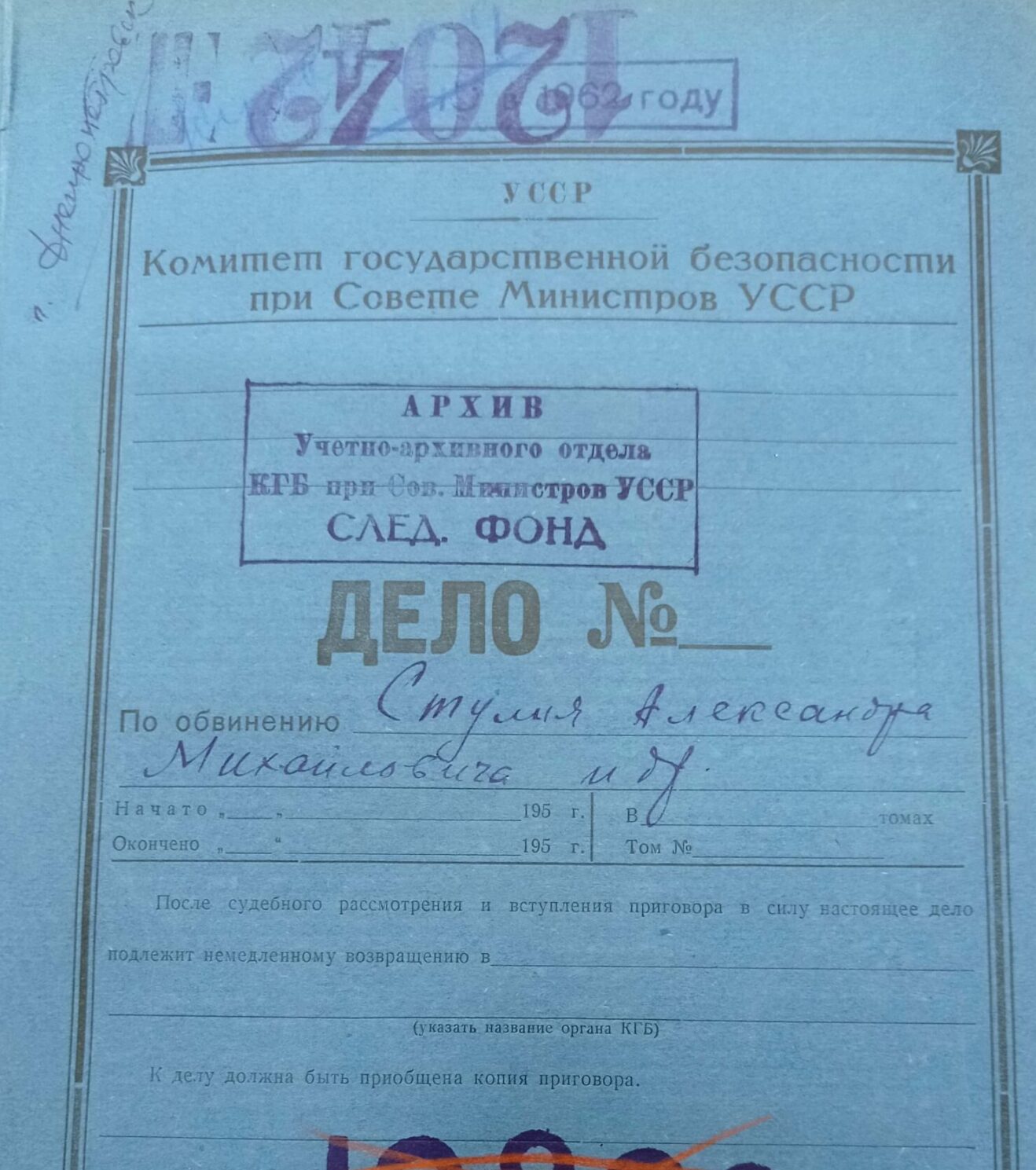
The repressive policies of the Soviet authorities are a widely recognized historical fact, repeatedly confirmed by scholarly research and the testimonies of victims. In many families whose ancestors lived in the territories of the former Soviet republics, memories of repression against relatives have been preserved.
Repression against an individual could take various forms of punishment, the most common of which were the death penalty, deportation outside Ukraine (including to Siberia), or imprisonment in forced labour camps.
In the Soviet Union, individuals convicted of crimes were generally divided into two categories: criminal and political prisoners. Victims of repression predominantly belonged to the political group and were accused of espionage, collaboration with foreign intelligence services, anti-Soviet agitation, and similar offences.
The main wave of repression in the USSR occurred during the 1930s and 1940s. Some of those who were repressed were rehabilitated after 1956, but many victims were never officially cleared.
Despite the existence of electronic databases of repressed individuals, significant portions of archival documentation relating to political repression, including dekulakization, remain unexplored.
Our services include:
- searching for and obtaining copies of repression case files;
- searching for and obtaining copies of camp registration cards and/or camp case files;
- searching for and obtaining copies of protocols related to dekulakized individuals.
Please fill out the form, and we will contact you to clarify the details.